
Soon stocks will run out
Dont miss this opportunity while supplies last.


Benefits of Indigo Powder for Hair
Indigo powder is one of the oldest natural hair dyes, and it is the plant-based way to get dark brown or black hair without ammonia or PPD-based chemical dyes. Used together with henna, it has long been a popular way to colour hair and cover grey at home, and many people choose it as an alternative to salon colour. It is also surrounded by big claims about hair growth, strength, and even reversing grey hair, and not all of them hold up.
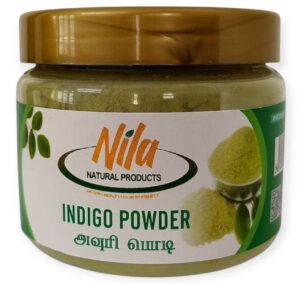
What Is Indigo Powder?
Indigo powder is made from the leaves of the Indigofera tinctoria plant, a member of the bean family grown mainly in Asia and parts of Africa. The leaves are soaked in water, which ferments into a blue liquid, then sun-dried and ground into a fine greenish-blue powder. People have used indigo for thousands of years to dye fabric, and today it is used as a hair dye, usually together with henna.
5 Benefits of Indigo Powder for Hair
1. A Plant-Based Way to Get Dark Brown or Black Hair
Indigo is a natural dye, and it is the ingredient that turns the orange-red tint of henna into deep brown or black. On its own, indigo gives light or grey hair a bluish or greenish tint, so most guides use a two-step process: henna first, then indigo. The final colour depends on your starting hair colour and hair texture, so every result is a little different.
2. Covers Grey Hair Naturally
When it is layered over henna, indigo can give good coverage on grey and white hair. Note that indigo covers grey hair, but it does not prevent greying or restore your natural pigment. Claims that it reverses premature greying come from product pages, not from clinical research.
3. Free of PPD When It Is Pure
Many dark chemical hair dyes contain PPD (para-phenylenediamine), a common cause of allergic reactions. Pure indigo powder does not contain PPD, which is why people with sensitivity to chemical dyes often switch to it. This is not the same as being allergy-proof. Rare cases of allergic reactions to pure indigo powder have been reported in the medical literature, so a patch test is always needed.
4. Adds Shine and Softness
Henna and indigo stain the outer layer of the hair rather than changing its inner structure the way oxidative dyes do. Many users find that their hair looks glossier and feels smoother after colouring. Results vary with hair type, and indigo can also leave hair dry or frizzy if you skip conditioning, so follow up with a nourishing oil or mask.
5. May Help Soothe the Scalp
Indigo is used in Ayurvedic hair care for its cooling feel, and some brands say it has anti-fungal and anti-inflammatory properties that help with dandruff and oily scalp. There is little clinical evidence for this, so treat it as a possible bonus rather than a treatment. For persistent dandruff, itching, or scalp problems, see a doctor or dermatologist.
Conclusion
Indigo powder is a useful plant-based way to get natural brown or black hair and cover grey, especially when it is used after henna. It can leave hair looking shinier, but claims about hair growth, baldness, and reversing greying are not backed by clinical evidence. Choose a pure product, avoid anything sold as “black henna”, and always do a patch test and strand test before colouring your whole head.
FAQ’s
1. What is indigo powder made from?
It is made from the leaves of the Indigofera tinctoria plant. The leaves are soaked in water, which ferments into a blue liquid, then sun-dried and ground into a fine greenish-blue powder.
2. Does indigo powder cover grey hair, and can it reverse greying?
Layered over henna, it can give good coverage on grey and white hair. It only covers grey hair. It does not prevent greying or restore your natural pigment, and claims that it does come from product pages, not clinical research.
3. Is indigo powder safe for hair?
Pure indigo powder is generally used as a plant-based hair dye and does not contain PPD. However, allergic reactions are possible, so always perform a patch test before application.
4. Does indigo powder help hair growth or stop hair fall?
There is no clinical evidence that it regrows hair or treats baldness. Its proven use is as a plant dye, and any shine or softness comes from the coating on the hair, not from changes under the skin.
5. Can I use indigo powder without henna?
On its own, indigo gives light or grey hair a bluish or greenish tint. For natural dark brown or black hair, most guides use a two-step process: henna first, then indigo.


